Things I've designed,
modeled, and tested.
Four projects spanning fluid systems, simulation, and experimental physics. Expand any entry for detail, or open the full case study.
Systems
A Pelton-wheel impulse turbine designed for off-grid power in developing communities. A bucket wheel converts the kinetic energy of a high-velocity water jet into rotation, transmitted via a belt-driven motor assembly to generate electricity.
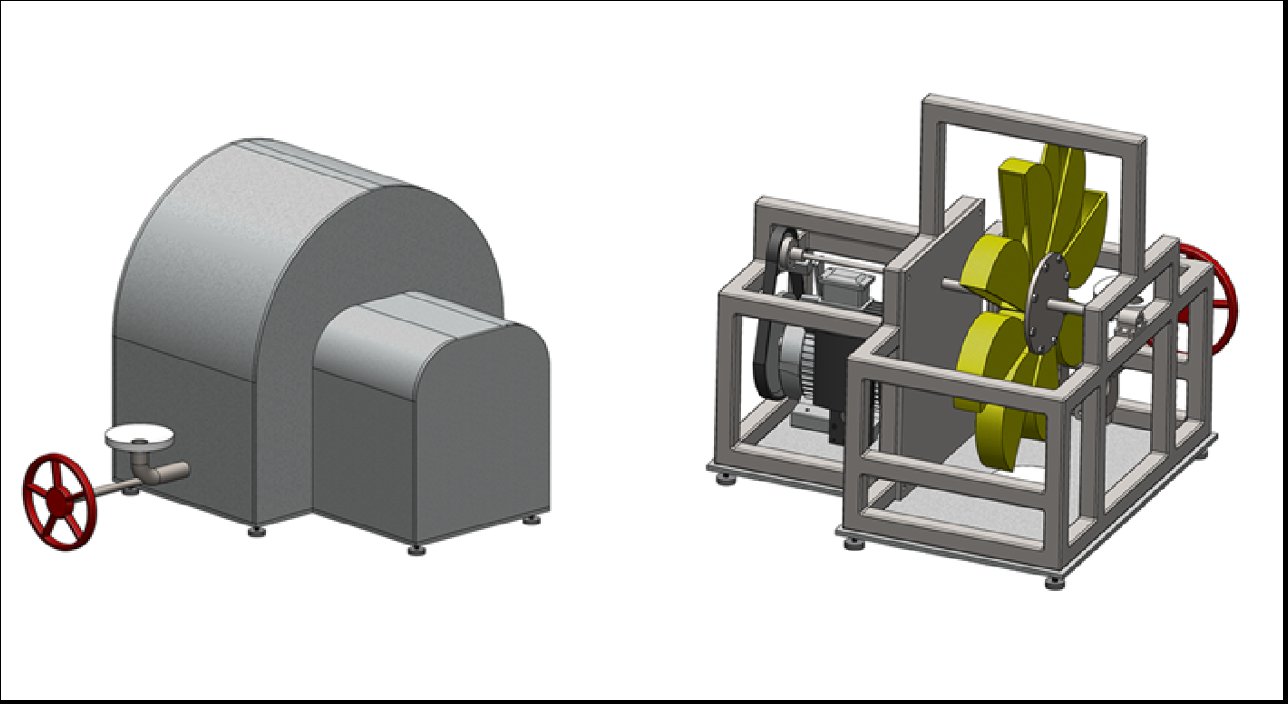
My role — motor & drive assembly: I designed the motor housing geometry, mounting system, and full belt-driven drivetrain. The turbine wheel uses eight buckets that catch a high-velocity water jet from an adjustable nozzle, spinning a shaft that drives a pulley-and-belt system to the motor. A spear valve controls jet velocity via an external hand wheel.
View full case study →A blade element momentum solver written from scratch to design a portable river turbine that produces 200 W in a 2 m/s current. Sizes the rotor, generates the performance map, builds a controlled power curve, and quantifies the risk of missing the target.
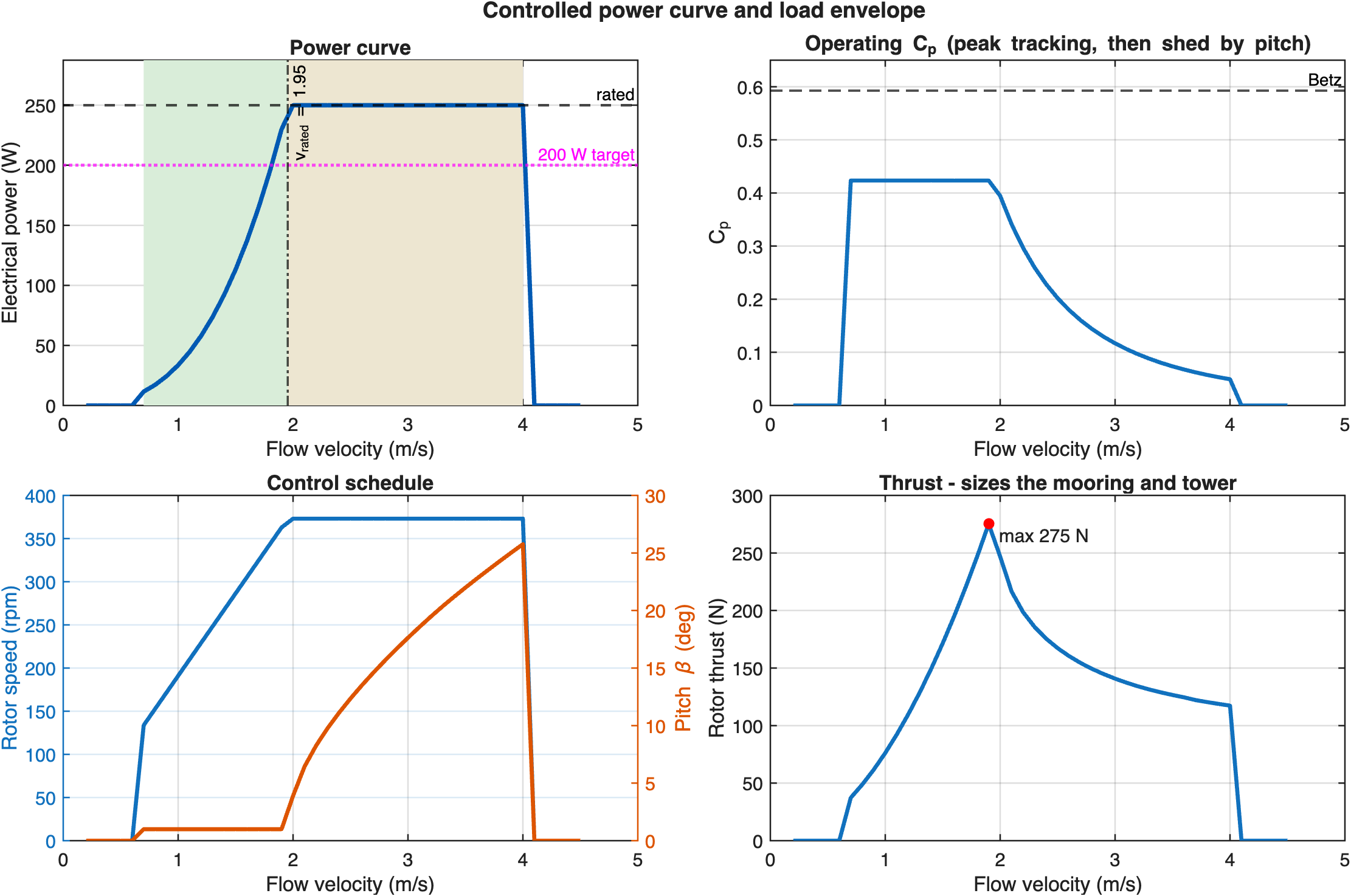
Results: Peak power coefficient of 0.423 — 71% of the Betz limit, the theoretical maximum any free-stream rotor can reach. 268 W electrical at the design point, 1202 kWh/yr, and a 93.5% probability of clearing the 200 W target once manufacturing tolerances and river variability are accounted for. Four verification checks run before any result is reported, including confirming the solver reproduces actuator disc theory to within 3.8%.
Physics
Two independent methods measuring the same quantity, tested for agreement using formal measurement uncertainty rather than a percent difference. The methods disagree by a factor of several hundred, and the analysis identifies why.
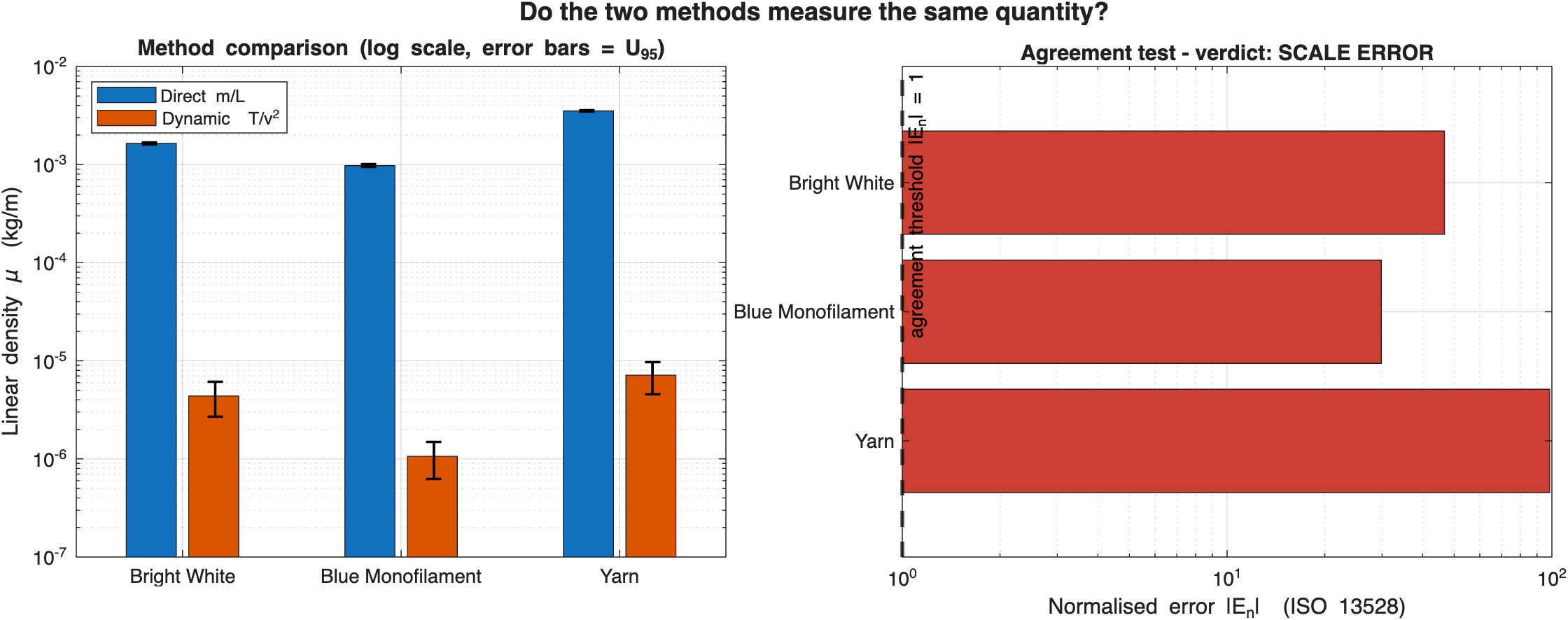
What I found: The two methods disagree by factors of 375 to 919 — far beyond what measurement uncertainty can explain. The interesting part is that every regression fit scores R² above 0.98. The data is perfectly consistent with itself and still completely wrong, because R² only measures how well a line fits the points you gave it. I traced the fault to the recorded tension values, reported the negative result, and specified what needs re-measuring instead of publishing a number I could show was wrong.
Physics-driven investigation into how putter geometry, angle, and material affect golf ball launch dynamics. Modeled contact mechanics and coefficient of restitution to quantify how design variables translate into on-green outcomes.
Why it mattered: As a competitive golfer, I wanted to ground putter "feel" in measurable physics. By modeling coefficient of restitution across different face materials and loft angles, the project quantified why certain putter designs produce more consistent roll.
View full case study →